
News
ECOWAS launches Technical Working Groups to Harmonise Lighting and Appliance Testing Procedures
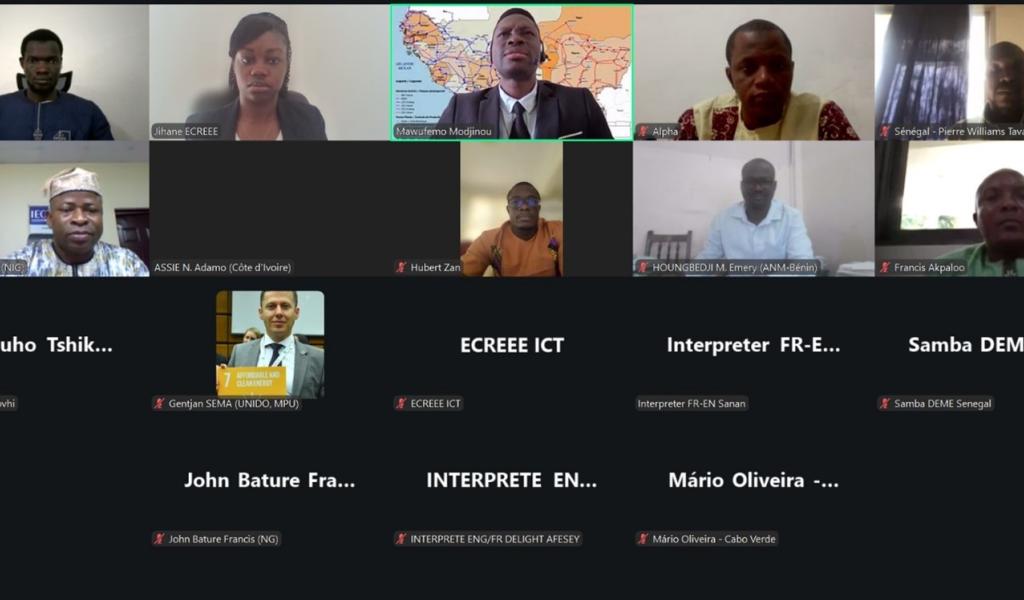
On 17 December 2025, the ECOWAS Appliances Test and Label Working Group (EATLWG) convened its inception meeting, marking the official launch of two Technical Working Groups (TWGs) dedicated to advancing regional energy efficiency. The meeting was organized by the ECOWAS Centre for Renewable Energy and Energy Efficiency (ECREEE) with support from UNIDO, under the framework of the Energy Efficiency for Sustainable Livelihoods in Africa (EELA) Program.
The meeting formally launched two TWGs focused on lighting and cooling appliances, with the mandate to harmonise test procedures and develop mutual recognition frameworks across ECOWAS Member States. By addressing fragmentation in testing, labelling and enforcement practices, the initiative aims to strengthen compliance, reduce technical barriers to trade, and accelerate the uptake of energy-efficient appliances across the region.
In his opening remarks, the Acting Executive Director, Mr. Gibson Obasi highlighted the growing momentum around energy efficiency in West Africa and the strong policy foundations already in place. Over the past decade, ECOWAS has adopted key frameworks, including the ECOWAS Energy Efficiency Policy and the ECOWAS Standards Harmonization Model, and developed Minimum Energy Performance Standards for priority appliances such as lighting and cooling. He emphasized that standards alone are not enough, as their effectiveness depends on harmonised testing procedures, comparable results and mutual confidence in conformity assessment across Member States. These are precisely the gaps the Technical Working Groups are designed to address.
The EELA Programme, represented by Mr. Ndivhuho Tshikovhi, UNIDO Project Associate, provided an update on its evolution from a project focused on East and Southern Africa into a continental programme now extended to ECOWAS. Implemented through a regional framework complemented by dedicated Country Windows, EELA has expanded both its geographic reach and technical scope, now including support for industrial energy efficiency. The Programme is working closely with regional centres such as ECREEE, building on the achievements of the earlier EELA Project.
Discussions during the meeting acknowledged that ECOWAS is well positioned to advance harmonisation, while also recognising persistent challenges. These include uneven laboratory capacity, limited enforcement mechanisms, and the lack of mutual recognition of test results, which continue to increase costs for manufacturers and limit the effectiveness of existing standards. The TWGs were therefore welcomed as a practical mechanism to bridge the gap between policy and implementation.
Member States actively shared their perspectives and expectations, highlighting recent initiatives and investments in energy efficiency, as well as the challenges faced in fully operationalising them. They also expressed interest in participating in the TWGs, viewing regional harmonisation as an opportunity to strengthen technical capacity, accelerate implementation, and maximise the use of existing infrastructure. Several countries sought guidance on how to engage more deeply with the EELA Program, including through preparing proposals to join EELA as Country Windows. UNIDO and ECREEE encouraged interested Member States to build on the outcomes of the TWGs, identify national priorities and capacity gaps, and leverage the harmonisation process as a foundation for tailored national support.
The inception meeting concluded with a shared commitment to active participation in the Technical Working Groups and a common understanding that harmonised testing and mutual recognition frameworks are critical enablers of energy efficiency as a development tool.