
News
Strengthening Industrial Performance Through Energy Management: Highlights from EELA Kenya’s Kericho EnMS Training

On 11–12 March 2026, more than 35 professionals from Kenya’s tea industry gathered at the Sunshine Hotel in Kericho for a milestone two‑day training on Energy Management Systems (EnMS). Organized by EELA Kenya and the Kenya Association of Manufacturers (KAM), the workshop aimed to build technical capacity, strengthen local expertise, and accelerate the adoption of ISO 50001‑aligned EnMS across industrial facilities. Representing factory managers, engineers, technicians, and quality specialists - 13 of whom were women - the participants reflected the diversity of the tea value chain.
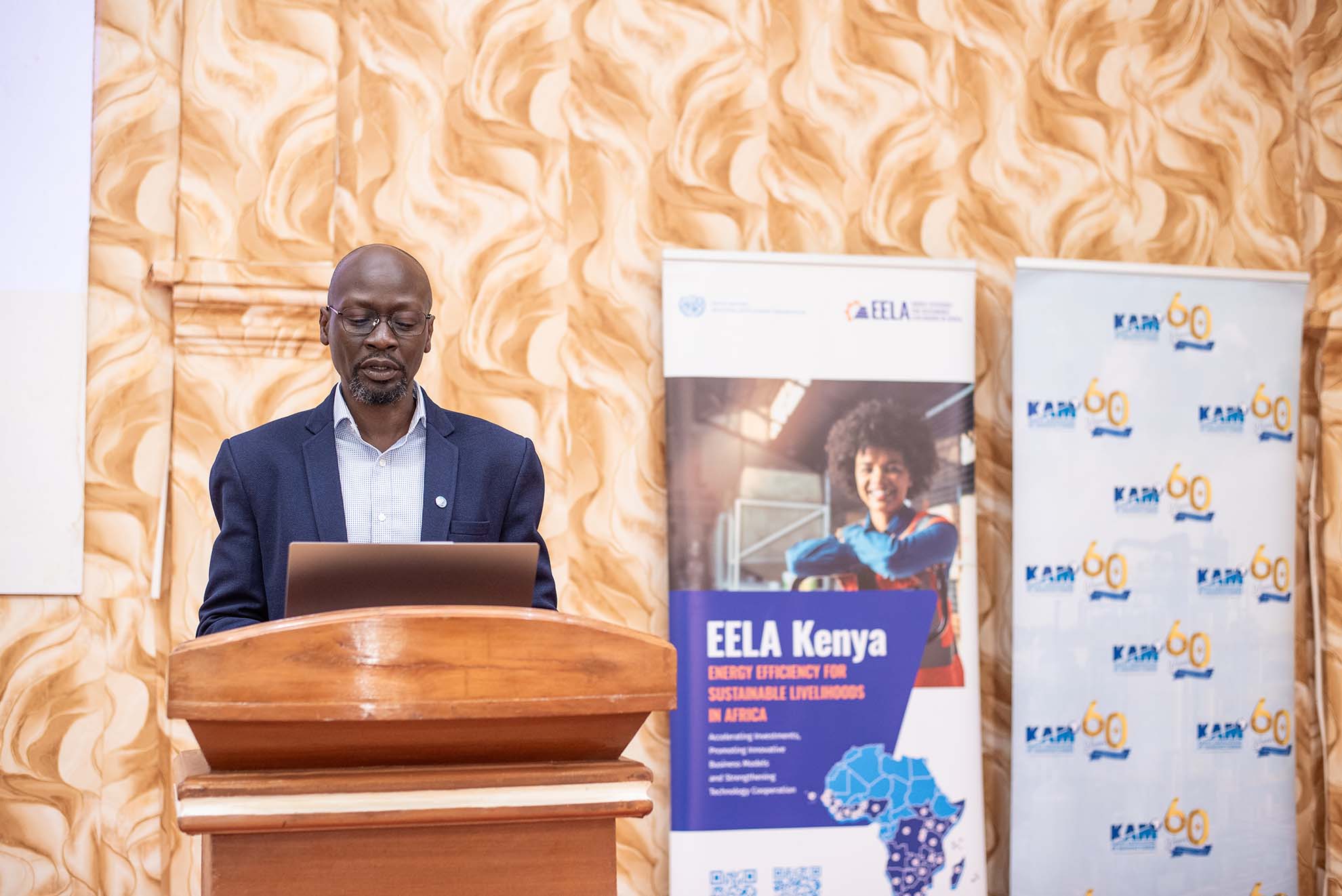
Energy efficiency is increasingly central to the competitiveness and resilience of energy‑intensive value chains such as tea. As EELA Kenya’s National Project Coordinator Fredrick Ochieng highlighted during the opening of the EnMS User Training in Kericho, “Energy management is not only about reducing consumption: it is about improving productivity, strengthening compliance, and aligning with Kenya’s broader low‑carbon industrial transformation.” Indeed, without EnMS, industries often face avoidable energy losses, rising operational costs, and missed investment opportunities. EnMS creates a systematic approach that helps factories understand where their energy goes, how performance changes over time, and where targeted improvements can deliver both immediate and long‑term gains.
The training, conducted by an international and a national energy experts, highlighted why energy management is no longer optional. Industrial energy efficiency delivers lower operating costs, improves reliability, enhances competitiveness, and reduces exposure to rising energy prices, all while cutting greenhouse gas emissions. Yet, industries worldwide still struggle to integrate these practices due to organizational barriers, insufficient data, and limited technical skills. The training directly addressed these challenges, emphasizing that EnMS success hinges on three enablers: people, technology, and information. The Kericho training responded to critical needs within Kenya’s industrial landscape: limited visibility of energy consumption patterns, gaps in technical capacity, and the absence of systematic monitoring frameworks. Many facilities still rely on ad‑hoc energy audits that quickly lose impact.
A DEEP DIVE INTO ENERGY MANAGEMENT AND ISO 50001
The first day of the workshop introduced the core components of an Energy Management System: leadership commitment, energy policy, roles and responsibilities, planning, operational controls, documentation, and communication frameworks. Participants engaged with the UNIDO EnMS Tool, gaining hands‑on experience in setting baselines, identifying Significant Energy Uses (SEUs), and understanding how energy data translates into performance indicators. These fundamentals form the “starter pack” needed to build and maintain an ISO 50001‑compliant system.

The second day focused on energy performance evaluation, statistical analysis, and continuous improvement. Participants explored Energy Performance Indicators (EnPIs), regression techniques, and operational behaviour change, one of the most underestimated yet impactful levers for energy savings. The facilitators illustrated how even simple operational adjustments, such as controlling idle loads or optimizing compressed air systems, often yield savings greater than 10% without capital investment.
Discussions also expanded to financial analysis, risks and barriers, and the strategic importance of integrating energy‑efficient procurement and design practices. These concepts reinforced a central message: sustainable energy management is a continuous process, not a one‑off project. As shown in global UNIDO programmes, companies that embed EnMS into daily operations unlock sustained performance improvements that far exceed the outcomes of isolated audits or technology upgrades.
BUILDING MOMENTUM FOR KENYA’S GREEN INDUSTRIAL FUTURE
The Kericho training established the foundational competencies required for structured energy management across Kenya’s tea processing facilities. By equipping participants with standardized methods for data collection, performance monitoring, and operational control, the programme enhances the sector’s ability to implement ISO 50001‑aligned systems and to drive measurable, verifiable efficiency gains. The next phase will focus on applying these tools within facilities to generate performance data, validate improvements, and support long‑term integration of EnMS into routine industrial operations.