
Focus
EELA Zimbabwe Convenes Sustainability Forum to Review Evidence, Achievements and Pathways for Continued Action
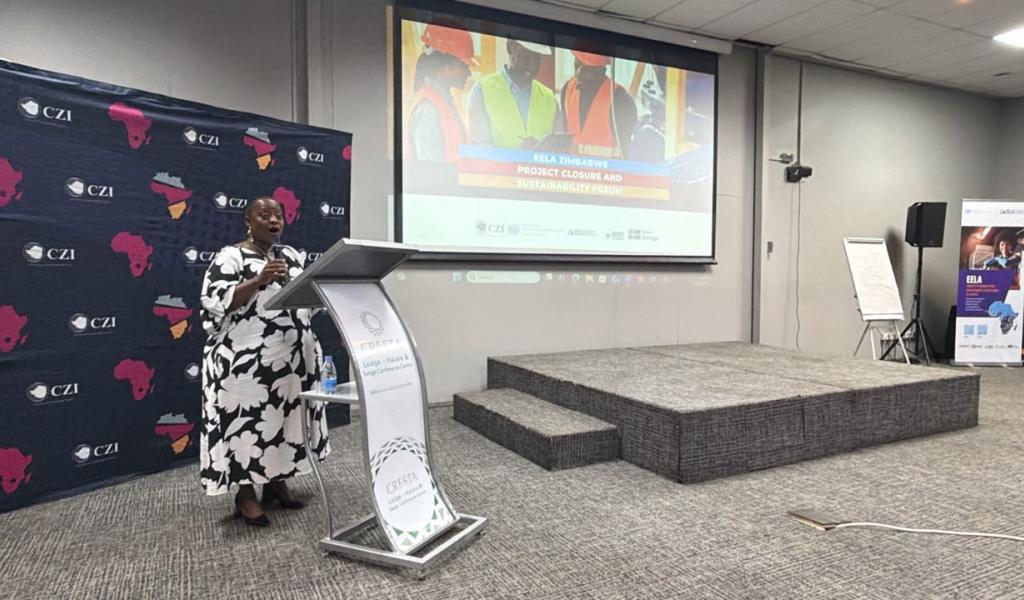
6 August 2026, Harare, Zimbabwe - Government representatives, industry actors, academia and development partners came together under the EELA Zimbabwe Country Window Project for the Zimbabwe Project Closure and Sustainability Forum. Building on earlier consultation meetings held across the country in early 2026, the event provided an opportunity to collectively assess the analytical insights generated through UNIDO-supported studies and discuss priorities for advancing energy efficiency and low-carbon industrial development in Zimbabwe.
INFORMING DECISIONS THROUGH COUNTRY-SPECIFIC EVIDENCE
Between 2025 and 2026, four studies were conducted in Zimbabwe, covering energy-efficient appliance markets, industrial energy use, the gender dimensions of the energy efficiency sector, and opportunities related to industrial motors and Minimum Energy Performance Standards (MEPS). Combining desk research with on-the-ground assessments of energy consumption and industrial practices, the studies generated new evidence while identifying cross-cutting priorities, bottlenecks and opportunities to inform future action on energy efficiency policy, regulatory frameworks and industrial upgrading.
The appliance market assessment on industrial motors and air conditioners confirmed that Zimbabwe has already laid important foundations for appliance energy efficiency regulation, including draft MEPS and energy labelling regulations, ongoing standards development, and customs-linked import controls. However, the study also identified critical gaps, including the voluntary nature of existing standards, weak testing and enforcement capacity, and limited market data. The findings point to priority actions such as introducing mandatory MEPS, developing technical annexes, and strengthening institutional enforcement mechanisms to support effective implementation.
The industrial energy use mapping study combined industrial surveys and onsite energy audits across at least 40 facilities to generate new evidence on energy consumption patterns and opportunities to improve energy efficiency and productivity. It also found that implementation remains constrained by gaps in coordination, financing mechanisms, data systems and delivery capacity, with the lack of a structured financing ecosystem emerging as a key barrier to industrial energy-efficiency investment. The assessment on the industrial motors MEPS, conducted under the EELA Regional Window, showed strong potential for accelerating the adoption of energy-efficient motors through harmonized MEPS supported by stronger regulatory and testing capacity, targeted skills development, and financing mechanisms tailored to market and technology needs.
The discussions also explored findings from the gender assessment, which found that women are already participating in Zimbabwe's energy efficiency sector, but remain underrepresented in technical, leadership and other high-value economic roles. The study highlighted the importance of moving beyond participation metrics to better understand how energy efficiency interventions contribute to women's economic empowerment and influence. Key recommendations include strengthening monitoring frameworks to track access to finance, business growth, entry into technical careers, access in procurement opportunities and leadership outcomes.
CAPACITY BUILDING FOR A STRONGER AND SUSTAINABLE ENERGY SECTOR
Beyond evidence generation, the gathering reflected on how EELA Zimbabwe has translated analysis into practical action. Through a tailored Energy Management Systems (EnMS) training programme delivered in partnership with the Confederation of Zimbabwe Industries (CZI), 156 professionals were trained in energy management, while more than 20 companies expressed interest in receiving follow-up technical support. These results points to growing demand from industry for the skills and tools needed to improve competitiveness through more effective energy management.
CONTINUING THE WORK THROUGH EELA
Implemented by UNIDO with support from the Government of Sweden, the EELA Zimbabwe Country Window has contributed to strengthening the evidence base, institutional capacities and partnerships needed to advance energy efficiency in Zimbabwe. With the project cycle scheduled to close at the end of September, the forum marked a transition rather than an endpoint. The results and lessons generated under EELA Zimbabwe will continue to inform EELA’s work to promote efficient appliances, strengthen industrial energy management, support enabling policies and contribute to more competitive, inclusive and resilient industrial development in Zimbabwe.
Participants in the Zimbabwe Project Closure and Sustainability Forum emphasized that the value of EELA Zimbabwe lies not only in the activities delivered, but also in the evidence, partnerships and implementation pathways created along the way. Building on these foundations, continued collaboration with SACREEE and the EELA Regional Window will support progress on MEPS development, capacity building, knowledge exchange and industrial energy efficiency. The knowledge generated through the project will remain a resource for future energy efficiency initiatives in Zimbabwe and across the region.
Image above: Sekai Kuvarika, Chief Executive Officer of the Confederation of Zimbabwe Industries (CZI), delivering the opening remarks.