
Focus
From Assessment to Action: A Roadmap for Kenya’s ESCO Market
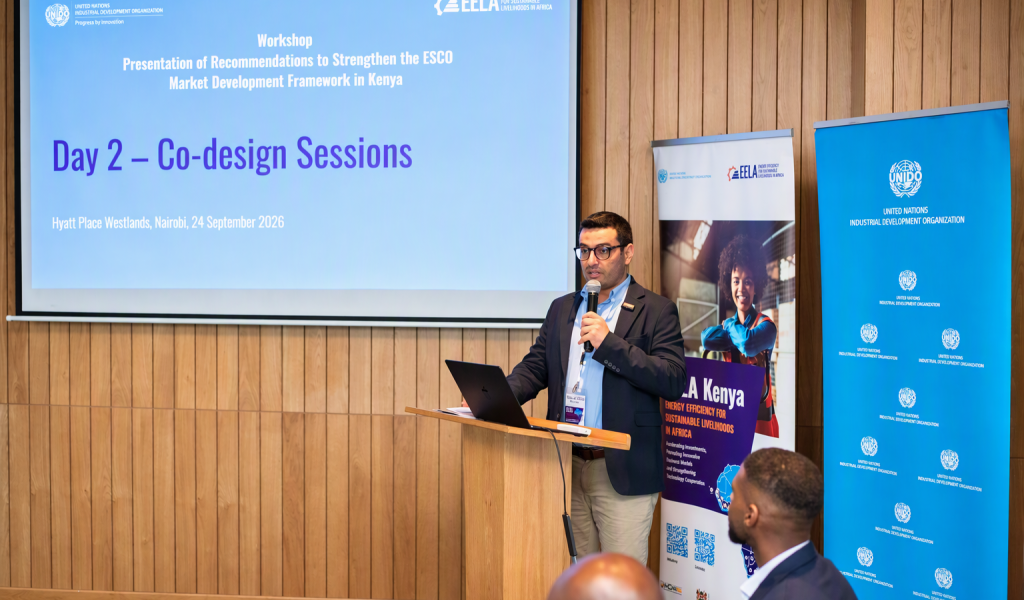
The Kenya Energy Service Company (ESCO) Market Assessment, supported by UNIDO under the EELA Kenya Country Window Project and discussed with the project’s stakeholders during a two-day validation workshop in Nairobi, has identified six connected areas for action to advance the development of the local ESCO market.

These areas span policy, regulation, institutional coordination, technical and capacity development, finance, and awareness and trust. While grouped by thematic dimension, the recommendations do not work in isolation. Rather, they address the ESCO market as an interconnected system, calling for coordinated and phased action among policies, workable contractual frameworks, credible measurement and verification, capable institutions, qualified professionals, and access to finance. Progress in one area alone is unlikely to unlock investment at scale. Instead, advances across these dimensions need to reinforce one another, creating the conditions for a stronger and more sustainable ESCO market.
The framework places Kenyan institutions and market actors at the centre of implementation, while clarifying the complementary roles of government institutions, regulators, utilities, industry associations, financial institutions, ESCOs, large energy users and development partners. It also identifies areas where technical and financial cooperation can provide catalytic support. By providing a roadmap for coordinated action and highlighting regulatory steps that make project performance easier to assess and strengthen confidence among clients and financiers, the framework aims to help stakeholders move from discussion to delivery, while supporting local ownership and long-term sustainability.
Across the six areas, the assessment highlights the conditions that need to be strengthened to build confidence in energy performance contracting, strengthen the ESCO market and move more energy-saving opportunities towards investment.
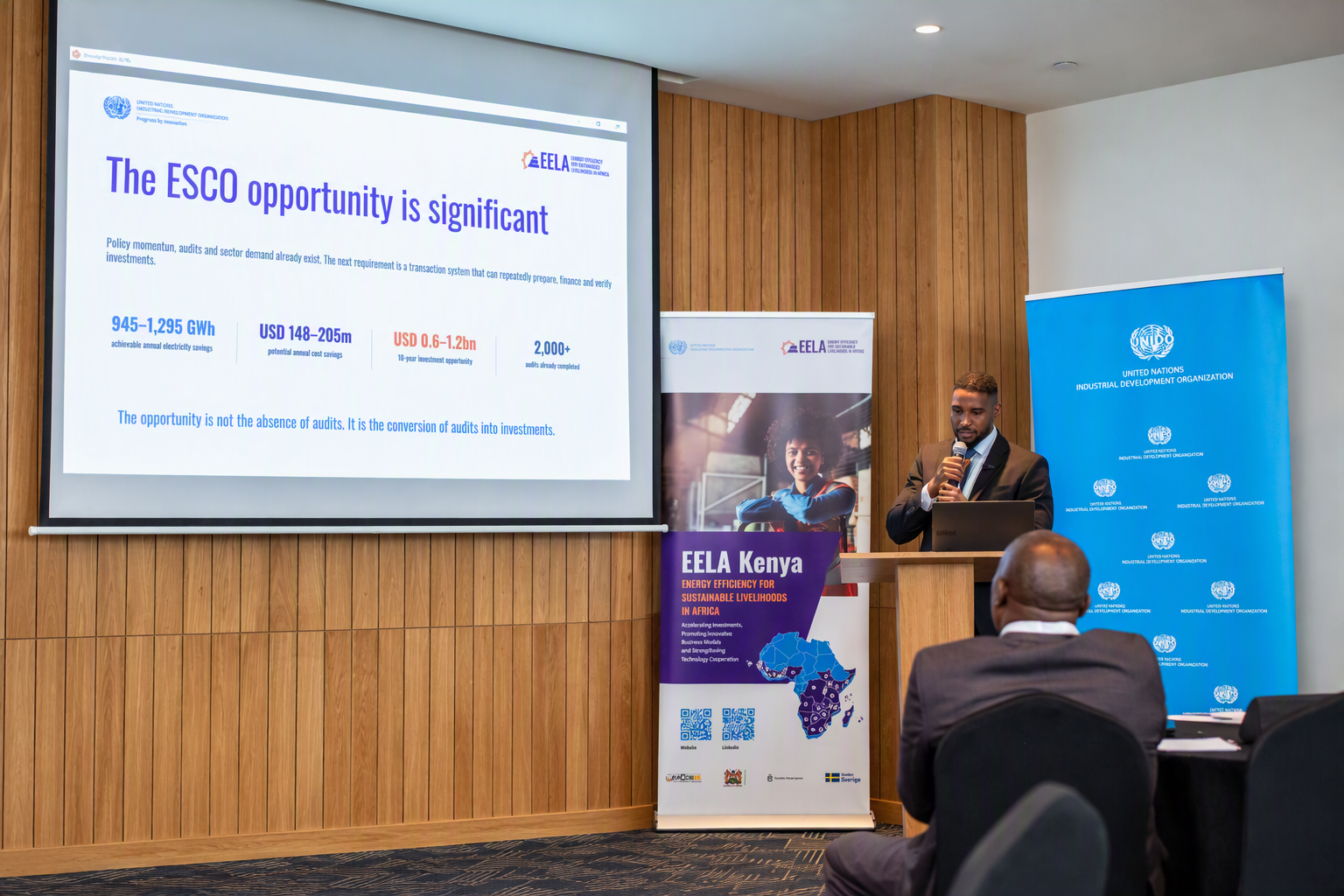
The main actions proposed are:
Policy
Align national energy-efficiency plans with sector priorities, improve monitoring of their implementation and strengthen policy support for financing and fiscal incentives.
Regulatory
Make energy performance contracting easier to use through clearer rules, standardised contracts, credible measurement and verification, and appropriate ESCO market requirements. The proposals also address public procurement, energy benchmarks and targeted incentives.
Institutional
Strengthen coordination among government institutions and market actors, including the proposed KPLC Super ESCO, and create practical connections among ESCOs, industrial and commercial energy users, public entities and financing institutions.
Technical and capacity development
Build the practical skills needed to develop and implement projects: qualified energy-efficiency and measurement-and-verification professionals, capable ESCOs, informed financiers and public institutions able to manage performance-based contracts.
Financial
Explore dedicated energy-efficiency credit lines, revolving funds and risk-sharing measures, supported by technical assistance, to help move viable ESCO projects towards commercial financing.
Awareness and Trust
Increase confidence in the ESCO model through targeted awareness activities, independently verified success stories, demonstration projects and peer learning across priority sectors.

To translate these recommendations into an operational trajectory, they are consolidated into an implementation roadmap structured around three successive phases. This phased approach provides a strategic sequence: first establishing the foundations for the market to function effectively, then broadening participation and consolidating market structures, and ultimately supporting the emergence of a mature and self-sustaining ecosystem. The implementation roadmap is designed to provide a strategic sequence rather than a fixed timeline, giving Kenyan institutions and their partners a clear direction for coordinated action while preserving the flexibility needed to respond to evolving market conditions.